We’re building the testing tool we wished existed.
Three infrastructure engineers. One problem we kept hitting. High coverage numbers, bugs in production anyway.
Why we exist.
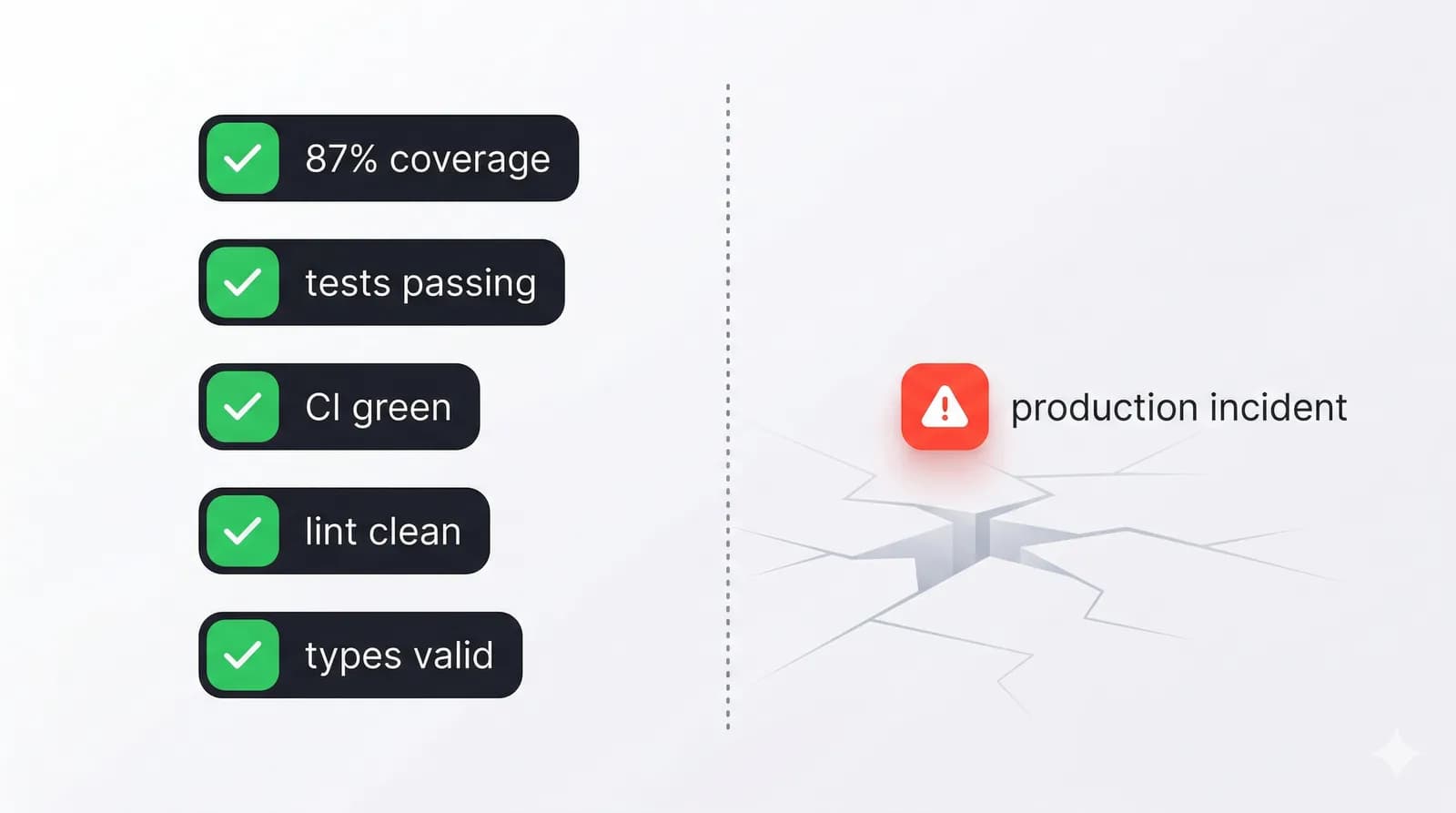
87% line coverage. Pristine CI/CD. Critical bug in production anyway. The tests checked that code runs — not that features work.
Fixing this means hiring QA or writing integration tests. Both roads end in “testing is too expensive, so we ship with gaps.” We’re automating the part that’s actually automatable.
The technical bet
Most test generation tools work at the file level. A feature isn’t a file — it’s a path through code: route handler → ORM → migration → webhook → job queue → email. We use Louvain community detection on your call graph to find which functions cluster into features. Then we do feature-level testing end-to-end. See how it works.
Harder to build. Real computational cost. But it means we test actual user-facing features, not code artifacts.
The team.
Three engineers. All from infrastructure. All tired of shipping systems with gaps because testing was too hard.
Deployment & Infrastructure
Built deployment infrastructure at a Series C company. Watched hundreds of integrations fail. Realized most could have been caught by better tests.
Payments & Reliability
Came from a payments platform. Spent too much time diagnosing production bugs that should have been obvious in testing.
Observability & Debugging
Did observability work. Spent half the time reverse-engineering what went wrong instead of preventing it upfront.
No VC pressure to grow 10x. One problem, one audience. When we miss something, we say it. When we’re unsure, we ask. We’re not pretending to have it all figured out.
What we believe. And what we're honest about.
Locked decisions
- Feature-level testing. Not files, not units.
- Real infrastructure. Actual databases, actual containers.
- Source code deleted within 45 minutes. Not negotiable.
- Transparent pricing. Not enterprise tax.
Still figuring out
- Performance profiling — worth the complexity?
- Visual regression testing — low demand, but some want it.
- IDE plugins — maybe, if enough people ask.
- Whether Louvain is right for every codebase.
Uncharted territory
Louvain on call graphs is not well-explored. We’re still finding edge cases — monorepos, circular deps, runtime magic.
Signal vs noise
Some generated tests are bad. We’re continuously improving filters. A bad test erodes trust faster than a bug.
Earning trust
Getting customers comfortable sharing code was harder than the tech. Trust is earned slowly and lost fast.
The dream is simple.
A team of eight engineers ships backend features without writing test code. They ship fast because they’re confident. They’re confident because every feature gets tested end-to-end, automatically, against the actual infrastructure.
No surprises in production.
Framework support